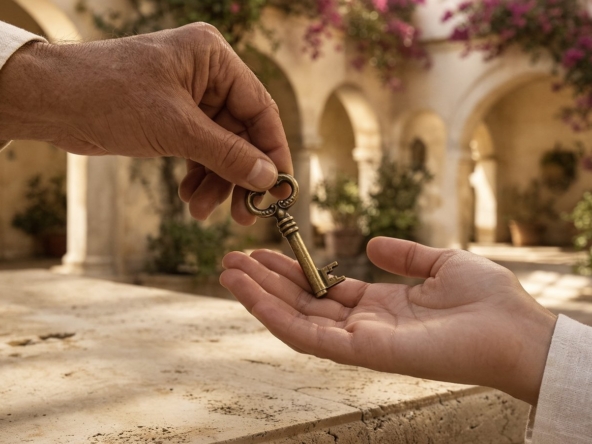
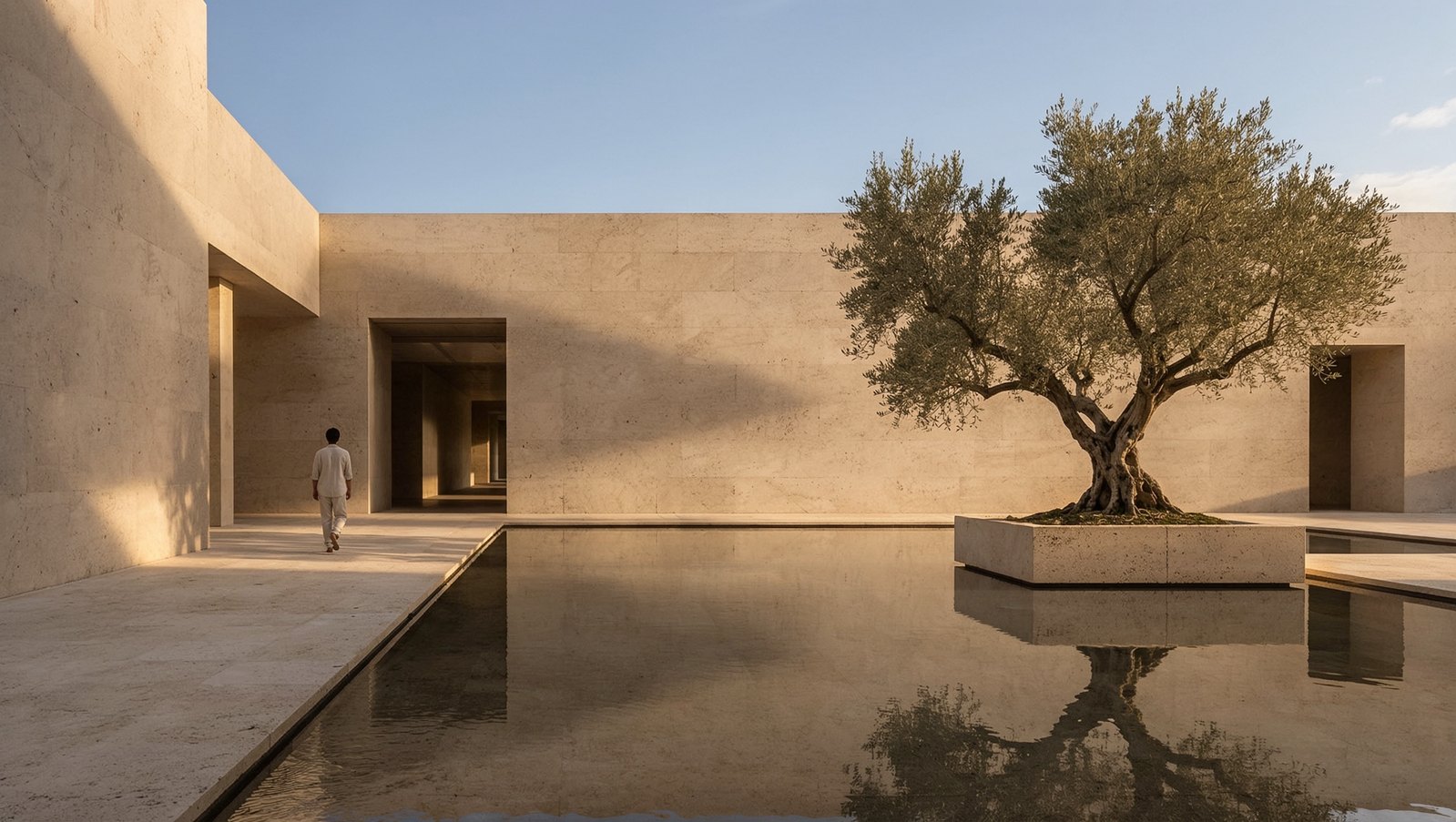
Architecture is not what a building looks like. It is a capital decision that keeps paying — or keeps costing — for the entire life of the asset. By the time most people stop to admire a building, the decisions that govern its economics have already been made, poured, and set. The form is fixed. The returns follow.
The decision that comes before the numbers
Architecture is usually treated as the last line of a budget: a finish, a façade, a matter of taste applied after the real financial work is done. We treat it as the first. The shape of a building is the shape of its cash flows. Orientation, envelope, structure, and plan are not aesthetic choices with financial side effects — they are financial choices wearing aesthetic clothing.
Think of it the way you would think of the coupon on a long-dated bond. The coupon is set once, at issuance, and it pays out — for you or against you — every year you hold the instrument. You cannot reprice it later without tearing the whole thing apart. Architecture behaves the same way. A well-designed building carries a coupon that compounds in your favor: lower cost to operate, longer relevance, stronger demand at the moment of transfer. A poorly designed one carries a coupon you service quietly, forever.
What we actually evaluate
Because the decision is permanent, the questions we ask about it are deliberately few, and each one is chosen to outlast style.
Does it age into value, or out of it? Materials and proportion either accrue dignity or accumulate dates. Stone, travertine, and honest structure grow more convincing with time. Trend-driven finishes begin depreciating the day the trend peaks. We underwrite for the version of the building that exists in twenty years — not the one in the launch photographs.
Can it change its mind? The most expensive sentence in real estate is “it would have to be demolished.” Generous floor plates, structural clarity, and workable ceiling heights let a building absorb new uses without a wrecking ball. Adaptability is not a soft virtue. It is optionality, and optionality has a price the market eventually pays for.
Was the operating cost designed in? A building’s envelope, orientation, and systems quietly determine decades of what it costs to run. These are largely locked at design and largely unfixable afterward. A façade that fights its climate is a recurring liability disguised as a one-time choice.
Does it belong to its place? Architecture that answers its site — its light, its landscape, its city — earns a kind of demand that imported templates never do. Belonging is not sentiment. It is scarcity, and scarcity is the most durable pricing power there is.
Will the next steward want it? Every asset is eventually transferred. The building the next owner is proud to hold is the building that stays liquid across cycles. Timelessness, in this sense, is not an aesthetic preference. It is a liquidity feature.
Why this is a capital question, not a design question
Capital comes first for a reason. Architecture earns its place as a pillar precisely because it is where capital decisions become permanent. Design is the moment the money stops being flexible. Everything upstream — the thesis, the underwriting, the price — can be revised right up until the form is set. After that, the building begins telling the capital what to do: what it will cost to hold, who it will attract, how it will age, what it will be worth when it changes hands.
Which is why the discipline has to run in the other direction. Capital should decide the architecture — deliberately, and early — before the architecture starts quietly deciding the returns.
The long lens
Fast capital treats a building as a trade to be exited before the design decisions come due. Patient capital lives with them, which is exactly why patient capital pays closer attention to them. When you intend to acquire, improve, and eventually transfer an asset rather than flip it, you cannot outrun a bad plan. You inherit it — every year, until you either sell the problem to someone else or fix it at a cost that erases the gain.
Good architecture removes that tax before it is ever levied. It is not the reward at the end of a project. It is the underwriting at the beginning of one.
A building is not made valuable by the market that finally notices it. It is made valuable by the decisions poured into it long before anyone did. Some things become more valuable with time — not because they are traded, but because they were built, and then stewarded, with time in mind.